
What The Sea Keeps
CALLUM TWOSE
The line drew tight across Samson’s palm.
For a moment he thought it had caught upon the rocks, another useless snag after hours of hauling weed and broken shell from the water. Then it pulled again. The wet cord slipped between his fingers and bit into the old cracks of his hands, opening them red beneath the salt. Samson closed his fist around it.
There was life on the other end.
He planted one boot against the side of the boat and drew the line in hand over hand. It fought him in short, violent bursts, diving whenever he gained upon it. Twice the cord almost escaped his grasp. He had known stronger fish, but none so unwilling to be taken. His shoulders burned, blood running thinly from his palm and disappearing into the wash around his boots.
Still he pulled.
Hours had drained from the day for this. The sun had begun its slow descent towards the sea, leaving a pale track of fire across the water. Beyond the black stones there had been nothing but silence since morning. No sails. No gulls low enough to trouble him. The other fishermen stayed on the near side, as their fathers had before them.
For eleven months, so had Samson.
This morning he had rowed straight beyond them.
He had not come so far to return empty-handed.
At last something flashed beneath him.
Silver first, then blue, then a streak of orange twisting through the green. Samson leaned over and dragged the creature upward. It broke the surface thrashing, scattering droplets into the fading light, its scales burning strangely bright as he seized it beneath the gills. Four hands long, perhaps a little more. Not large enough to explain the fight it had given him.
Beautiful, though. More beautiful than anything he had drawn from the sea in months.
For a while he merely held it, its body shuddering against his bloodied hands.
He had crossed the stones and made the sea yield something at last.
Samson looked towards the headland.
The sky above it had darkened.
He had been too occupied with the line to notice the colour leaving the sky. Rolling banks of grey had risen from the horizon and gathered one upon another, swallowing the last clean stretch of blue. Their undersides were dark as ash. Far out, where the light still touched them, their edges glowed white.
He knew clouds. He knew what they meant.
The fish kicked weakly. Samson tightened his grip.
Then thunder rolled beyond the headland.
Samson lowered the fish onto the boards and watched it beat its tail against the timber. Each strike left a wet silver mark, fading almost as quickly as it appeared. He gathered the trailing line from the water.
There would be time.
The storm was still some distance away. He had ridden worse weather, watched darker skies crawl over the horizon and split apart before reaching land. Clouds were fickle things. They gathered, threatened, changed their minds. A fisherman who feared every grey patch would spend half his life ashore.
Still, he looked towards the black stones.
They rose crooked from the water like the worn teeth of some buried creature. From this side they appeared smaller. Less important. He had crossed them, taken his catch, and found nothing waiting beyond but open water.
Yet no boat had followed him. His father had never crossed the stones. Nor his father before him.
There were old words for this stretch of sea, though Samson had long pretended not to remember them. Words muttered over drowned men and empty coffins. Words spoken by widows watching from the cliffs for something the water could never return.
The sea keeps what it takes.
Samson looked down at the fish. It struck the boards again.
His jaw tightened.
Eleven months was near enough a year.
He crouched and ran a hand across its scales. Even beneath the clouding light the colours remained strange, orange breaking through blue, blue through silver, as though the evening sky lay caught beneath its skin. He had never seen one so close. Never taken one from these waters.
Perhaps that was why men left this stretch of sea untouched.
Perhaps men were fools.
He took the wooden box from beneath the seat and placed the fish inside. Its body scarcely fit. The tail bent against one end, trembling. He lowered the lid. It rattled beneath his palm.
Only one fish, after all those hours.
Another low growl travelled across the water. This time the wind followed. It came cold across Samson’s face and disturbed the stillness, lifting loose strands of his hair and tugging at his shirt. The boat shifted beneath him.
He knew that feeling too.
For a moment another voice seemed to rise with the wind.
We have enough.
Samson’s hand stilled upon the lid.
The words had been softer then. Almost amused.
He could not remember whether Marian had smiled when she said them. He remembered her hand upon the side of the boat. That he remembered.
The clouds pressed farther over the sea.
Samson looked towards home, beyond the stones and headland. He could turn now. He should.
His eyes fell to the box.
Eleven months of empty rooms. Eleven months of keeping to the near side of the stones. Was he to turn back at the first thunder?
No.
He had chosen to come beyond the stones. He would choose when to leave.
Samson took hold of the line.
One more cast.
The line had scarcely disappeared beneath the surface when the first drops began to fall. They struck the boards one by one, darkening the timber between his boots. He waited, one hand around the cord, watching the trembling water.
Another drop. Then another.
The wind dragged the line sideways.
That was enough.
Samson hauled it back empty and reached for the oars.
By the time he turned towards the stones, the clouds had gathered into great walls of grey, their edges twisting and collapsing as though something moved within them. The headland was almost lost beneath their shadow.
He set the oars and pulled.
The boat rose beneath him and dropped again.
He pulled harder.
Rain came in sheets, striking his face and running through his beard. Green water turned black, broken only where the wind tore white from the waves.
The stones seemed no nearer.
The wooden box knocked against his boot. He pinned it with his heel, keeping both hands on the oars.
A wave struck the side, sending water across the boards.
Samson cursed and pulled. The cord had opened his palms; now the oars rubbed salt into them. His hands had endured worse. Hooks through fingers. Splintered wood beneath the nails. Forty years of rope and scale and winter water had made leather of them.
They had failed him once.
We have enough.
He saw Marian as she had been that evening, one hand gripping the side of the boat, the other holding her coat against the wind. She had come out with him often enough to recognise the look on his face when he meant to stay.
The clouds had gathered then too. Not these clouds. Not this storm.
Surely not.
‘Turn her around.’
She had said it gently, as though reminding him of something he already knew. He had glanced at the sky and turned back to his line.
‘One more catch.’
His answer. He had given it without looking at her.
That was all he had asked of the sea.
The boat lurched.
An oar slipped from his grasp and Samson fell against the seat. The box struck the boards, tearing its lid loose. The fish spilled out, silver flashing beneath the rain.
Samson stared at it.
Thunder cracked overhead. He heard the old words again, in voices belonging to men long buried and women left waiting upon cliffs.
The sea keeps what it takes.
‘No.’
What right had it?
For forty years he had given his body to these waters. Salt in his wounds. Winter in his bones. Days surrendered beneath an empty sky. The sea had fed him, and he had taken what it offered.
Then it had taken Marian.
And he had been the one to keep them there.
Was that not enough?
Another wave rose beside him. Samson saw it too late.
The boat climbed, turned almost upon its side and crashed into the hollow beyond. He fell to his knees, one hand catching the gunwale.
The other found the fish.
It thrashed beneath his palm.
For one terrible instant it was not scales beneath his fingers.
Marian had been there.
Her hand in his.
Cold rain down his arm. Her fingers digging into the back of his hand as the boat rolled. Marian had been thrown overboard. He had caught her. For the length of one breath, he believed strength might be enough.
Then the wave had come.
It tore her from his grasp. He reached again, but the water closed above her. He waited for her to surface.
She never did.
Samson drew the fish against his chest.
The sea rose around him, the boat groaning beneath each blow. The creature fought weakly, its colours lost in the darkness until lightning split the sky and turned every scale white.
He could throw it back. The thought was plain. His hands would not obey.
His fingers tightened until the creature bent between them.
Not again.
The next wave struck.
The fish tore from his grasp.
His hands closed upon nothing.
He lunged.
Silver moved beneath the black water, once, impossibly bright.
His body followed before thought could stop it, one knee striking the gunwale, his bloodied hand reaching towards the disappearing light.
For half a heartbeat he could almost touch it.
Then there was only darkness.
Samson remained there, arm stretched towards the sea as though it might accept a prayer.
Another wave approached.
He could lean farther.
Slowly, he drew his hand back and seized the gunwale as the wave broke against him.
The storm gave him nothing for the rest of the journey.
It raged as before, indifferent to the empty space beside his feet. Samson pulled until his shoulders failed, then pulled again. Rain washed the blood from his palms faster than the line had drawn it. By the time the stones emerged through thinning grey, he could scarcely close his hands around the oars.
He remembered little of the final stretch. Only timber scraping shingle, then the earth beneath his knees.
For some time he stayed in the wet sand while the sea moved behind him. His hands lay open before him. Salt-stained. Split. Empty.
The storm had already begun its journey elsewhere.
Across the horizon the walls of cloud loosened and divided, grey thinning into white where evening light passed through. Samson watched one shape swell above the water, become almost familiar, then stretch apart beneath the wind.
For a moment he thought of Marian.
Not of the wave.
Not of her fingers leaving his.
He remembered her upon the cliffs years before, head tilted towards the sky, finding creatures in the clouds that he could never quite see. Once she had insisted a cloud was a horse. He had called it a dog, and she had laughed as the wind made fools of them both.
Another shape formed. Samson almost gave it a name. Instead he watched.
The wind carried it farther over the sea until its edges softened, changed, and finally became something else.
Behind him, the battered boat shifted against the shore.
Samson lowered his eyes to his open hands.
Then he rose.
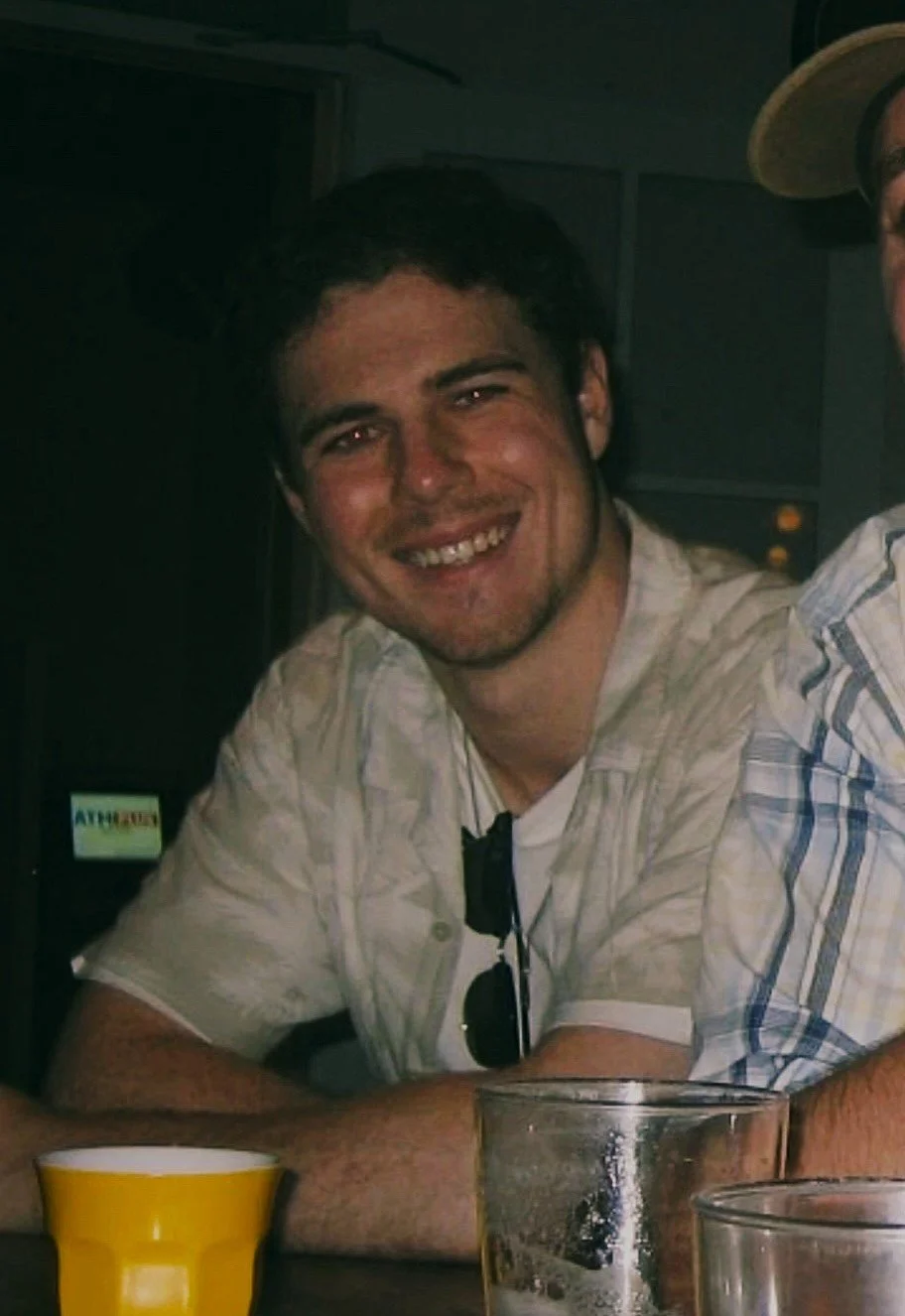
Callum Twose is an emerging writer, born and raised on Sydney’s Northern Beaches, pursuing a double degree in Arts and Education at Macquarie University. Inspired by his love for history, the environment and golden age cinema, his writing explores intimate character studies, the complexities of human relationships, the enduring influence of the past, and romantic connection.
