
EMILY SKRBINSEK
When you live with a battle in your head
and the fog of war rolls in,
diminishing reality to a plane of distant existence,
it becomes unclear where you end and the haze begins.
You weren’t always formless and thoughtless,
but you did always melt around all the wrong things–
I mean–
The right things.
Right?
The warm things,
the nice things–
But when warmth leads to flames,
and smiles flash teeth,
and it’s hard to tell when kindness
isn’t merely cloaking cruelty,
or an enemy scheme,
schemas sewn beneath
ensure conflict’s inevitability.
Your body of troops soon gets tired of fighting,
stretching between the softness it was
and the army it has to be.
Leaving spaces for the fog
to slip in between.
And when it rolls in,
it first seeps through your ears,
and sits behind your eyes,
then it leaks between your ribs.
Once it gets to your heart,
and hums within your bloodstream–
Forcing cells apart
until you’re scattered far too far–
you become a floating thing.
And it does its job well.
When it takes over your form,
something sits
between you and
the world.
Softening all of your sharp spots,
numbing your uncovered nerves.
It clings to your limbs,
coats your cracked ribs,
and chapped lips.
But numbing is never selective.
Soon everything falls victim.
Laughter and screaming echo much the same,
and you don’t recall the sensation of pain.
Or the pressure of a proper touch.
Swords and lips are now equally tough.
You cannot be harmed.
You cannot be cradled.
You cannot be cut.
You cannot be held.
When you become fog, the world passes by.
And you realise you don’t recall,
as your marching feet stop feeling the ground,
How, exactly, you got here at all.
But it is better this way,
sensitivity turned down,
to allow yourself to shift and shape
around their forms,
around their frowns.
And you are perfect from afar,
any shape they choose.
And when they hold out a hand
you slip right through.
What threat is touch to the intangible?
Why fear visibility when you can be anything?
What is pain? Or terror? Or stress?
Concern?
Care?
Love–
For in this phase of matter,
what matters but nothing?
When nothing could happen
to a soulless,
lifeless,
limitless,
formless,
thoughtless,
careless,
loveless,
pattern of atoms.
You want to scream,
“I am whoever,
whatever they see.
I am everything,”
and whisper,
“but nothing is me.”
Sometimes you wish to be held.
When the fighting becomes too much,
and forces you into fog,
the closest you get to “you” again
is liquid form–
Not the dampened walls
of each room
that you float through,
but the trickling tears that form
and trace the bones
you used to know–
The only evidence
that there remains a “you” to restore.
Proof that something has managed
to cool itself
and pull itself together,
somewhere,
deep,
deep
down
in your core.
To whisper the humanity
you’d forgotten to remember
to love, and lost while fleeing the war.
Once you evaporate,
the only time you start to recognise
your solid form
is when you cry.
And you know it is better this way.
But you can no longer think why.
Was it worth escaping that war,
when you’re left to fight
to find the “you” you fought for?
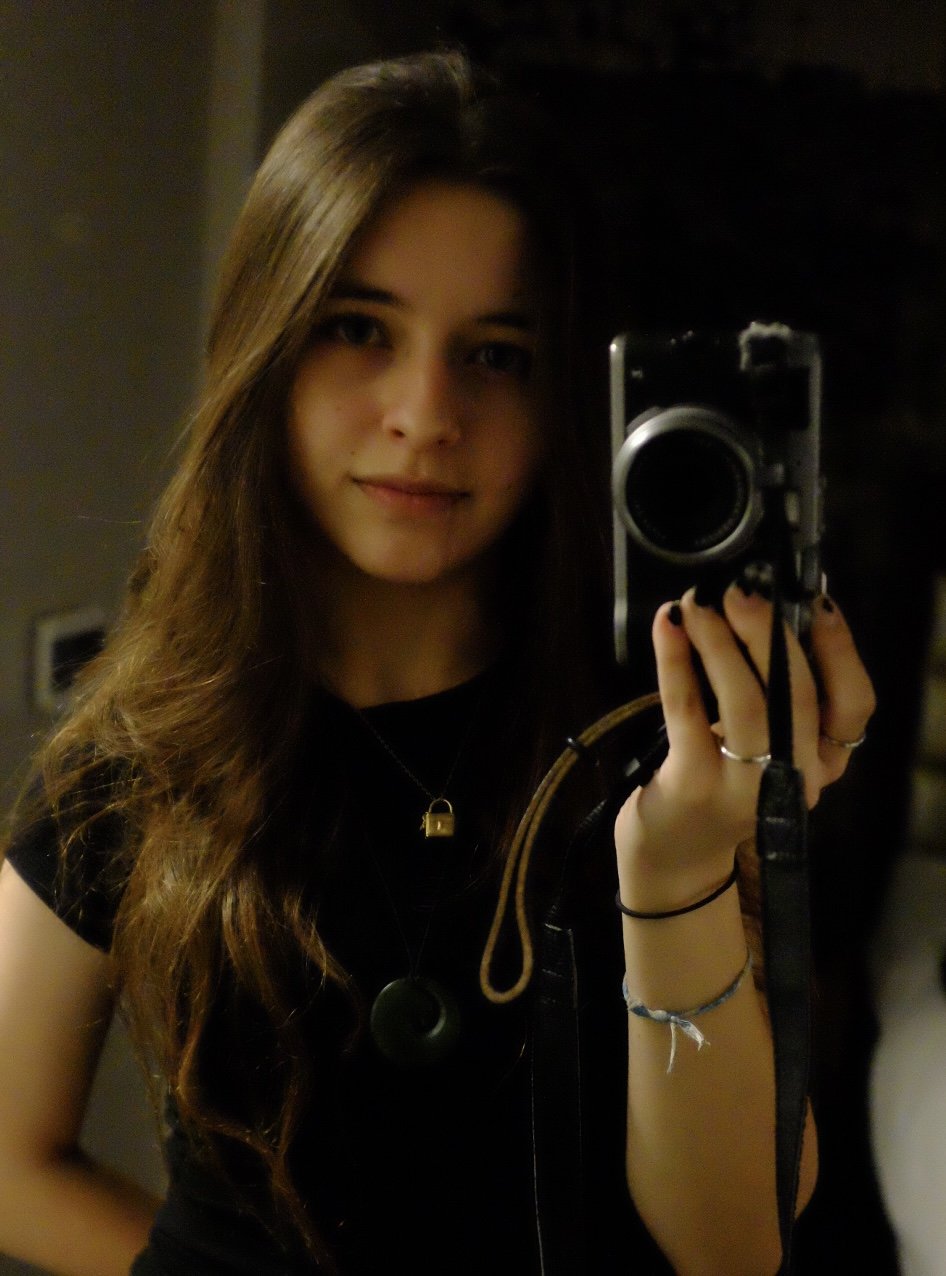
Emily is a writer and actress who was born and raised in Sydney, Australia. She prides herself on finding quotes that can delicately unpick the stitches of the deepest wounds, or otherwise hold a mirror to one’s core— leaving an ache comparable to that of a hug that squeezes the soul just too tight— and sharing these quotes with her closest friends (who have since become apprehensive to open her messages). With her own writing, Emily aspires to make her friends cry one day (but in a good way).
